527–1453
Byzantium & the Fall of Constantinople
For a thousand years after Rome fell in the West, the Byzantine Empire ruled from Constantinople (now Istanbul), a golden city with the great church of Hagia Sophia. In 1453 the Ottoman sultan Mehmed II captured it after a long siege. The fall of Constantinople is often used to mark the end of the Middle Ages.
Why artists painted it
To artists, Constantinople stood for a dazzling lost world. Painters showed emperors, empresses and the mighty walls that held out for so long.
 Sultan Mehmed II · Gentile Bellini, 1480
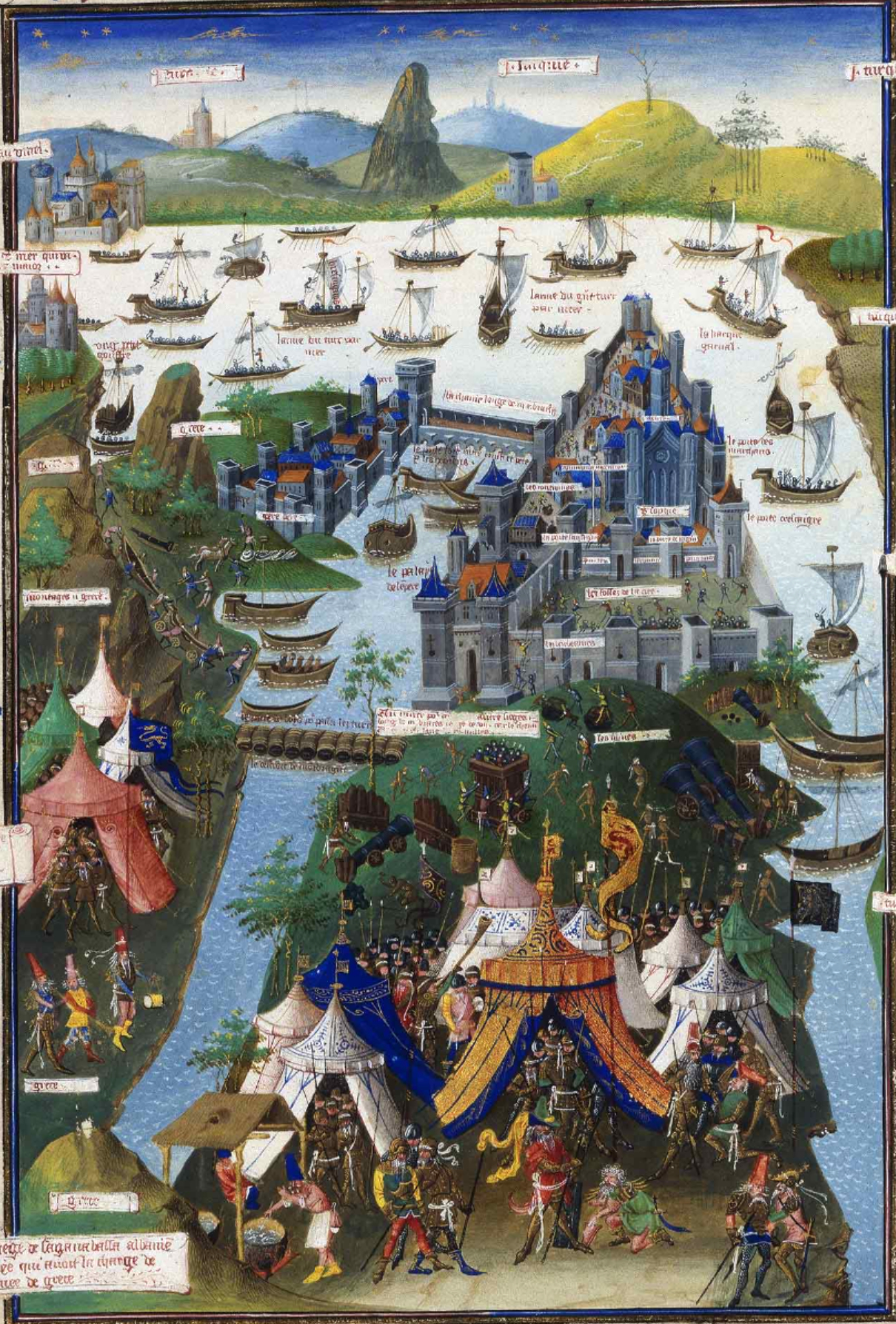 The Siege of Constantinople, 1453
Jean Le Tavernier · 1455
👁️ Painted at the time
Ottoman ships crowd the water around the walled city of Constantinople in this manuscript painting of the siege of 1453.
 Sultan Mehmed II
Gentile Bellini · 1480
🕰️ Painted 27 years later
Mehmed II conquered Constantinople in 1453 when he was only 21, and later he asked Venice to send a painter to his court.
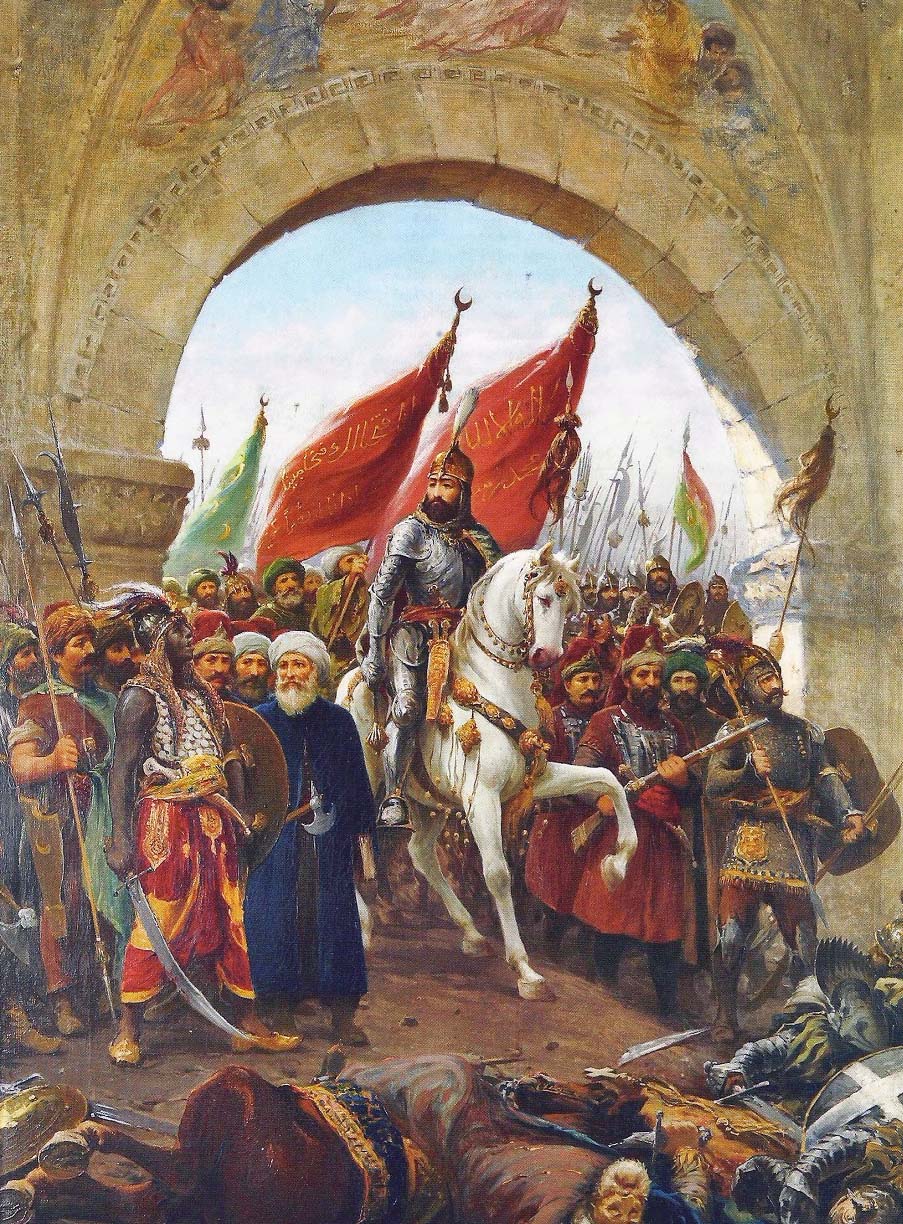 The Gates of Constantinople
Fausto Zonaro · 1903
🕰️ Painted about 450 years later
Sultan Mehmed II rides in triumph through the gates of Constantinople after its fall in 1453, with red banners overhead.
 The Conquest of Constantinople
Fausto Zonaro · 1903
🕰️ Painted about 450 years later
The Ottoman army marches toward Constantinople in 1453 in a painting by Fausto Zonaro, an Italian artist who worked for the Ottoman sultans.
 Belisarius Begging for Alms
Jacques-Louis David · 1781
🕰️ Painted about 330 years later
Belisarius, the great general of the Byzantine emperor Justinian, is said in a legend to have ended his life blind and begging, and here a soldier who once served under him recognizes him.
 The Fall of Constantinople
Panagiotis Zographos · 1839
🕰️ Painted about 390 years later
A Greek folk-style painting shows the Ottoman conquest of Constantinople in 1453 like a map, with soldiers and ships all around the city.
 The Siege of Constantinople
Philippe de Mazerolles · 1460
👁️ Painted at the time
Ottoman soldiers with ladders and cannon storm the walls in this French manuscript painting of the fall of Constantinople in 1453, made only a few years afterward.
 Empress Zoe and Constantine IX, Hagia Sophia
Byzantine mosaicists · 1042
👁️ Painted at the time
In a golden mosaic in the church of Hagia Sophia, the Byzantine Empress Zoe and her husband Constantine IX stand on each side of Christ and offer gifts.
 The Deësis Mosaic, Hagia Sophia
Byzantine mosaicists · 1261
👁️ Painted at the time
Christ looks out from the Deësis mosaic of Hagia Sophia, with the Virgin Mary and John the Baptist on either side.
 The Comnenus Mosaic, Hagia Sophia
Byzantine mosaicists · 1118
👁️ Painted at the time
The Virgin Mary and Child with the Emperor John II Komnenos and the Empress Irene, in a glittering golden mosaic in Hagia Sophia made around 1118.
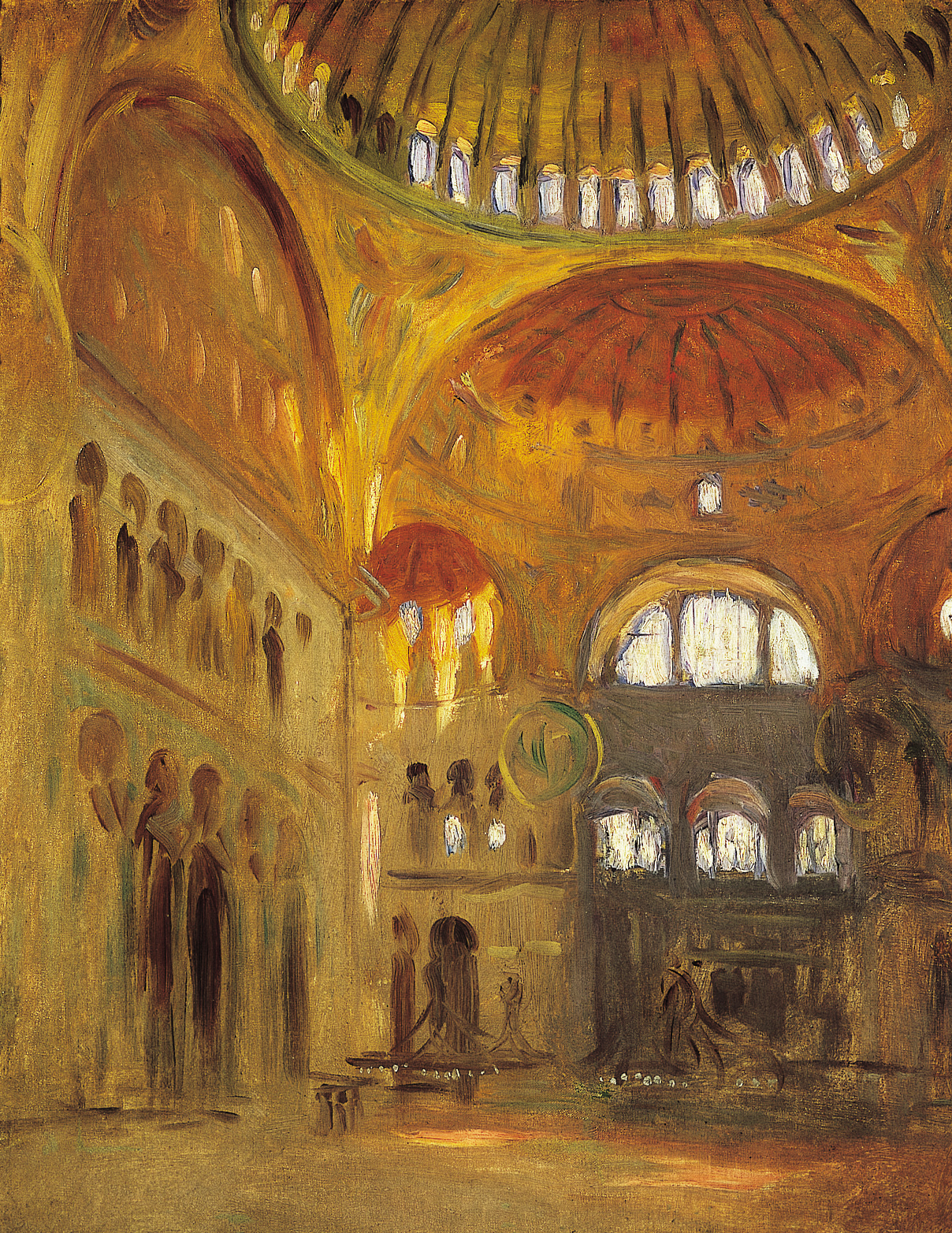 Interior of the Hagia Sophia
John Singer Sargent · 1891
🕰️ Painted about 440 years later
John Singer Sargent paints the soaring inside of the great church of Hagia Sophia, built by Justinian in 537 and turned into a mosque after the Ottoman conquest of 1453.
 The Fountain of the Gate of the Old Seraglio, Constantinople
John Frederick Lewis · 1838
🕰️ Painted about 380 years later
A domed fountain stands at the gate of the old palace of the Ottoman sultans in Constantinople, in a drawing by the English artist John Frederick Lewis, who traveled through the Ottoman capital in the 1830s and 1840s.